Your PC needs a sinewave UPS because modern high-efficiency power supplies with active PFC reject the stepped "simulated" waveform that cheap units output, causing shutdowns and clicks — a pure sinewave UPS recreates the exact clean 60Hz utility waveform and adds AVR voltage correction, surge absorption, and 15-40 minutes of runtime to save your work. If you have ever lost unsaved work to a power blip, it pays for itself the first time.
Utility power is a smooth 60Hz sinewave. A sinewave UPS recreates that exact waveform from its battery — which is exactly what your PC power supply was designed to eat.
What is the difference between pure and simulated sinewave?
Cheaper UPS units output a "simulated" or stepped sinewave. Most older hardware tolerates it; modern high-efficiency power supplies with active PFC do not always — they can shut down, click or run inefficiently on stepped power. Pure sinewave matches the utility waveform closely enough that the PSU cannot tell the difference.
Why does active PFC need pure sinewave?
That is why pure sinewave output is the recommended type for desktop PCs, gaming rigs, media servers and anything with a modern PSU. Active PFC (power factor correction) draws current in a specific pattern that a stepped waveform cannot satisfy, which is why 80 Plus Gold PSUs are the ones that most often misbehave on simulated sinewave.
What three layers does a UPS protect?
Beyond the waveform, a UPS protects in three layers: it cleans voltage fluctuations (AVR, automatic voltage regulation), absorbs surges, and provides battery runtime during outages so you can save and shut down cleanly. AVR matters most in areas with frequent brownouts, where voltage sags well below 120V.
How much runtime do you actually need?
Runtime math: a 1000W unit with a 300W PC draw gives roughly 20-40 minutes. Your goal is not to keep gaming through blackouts — it is to survive the 30-second blips and never lose unsaved work. For a desktop + monitor, budget for 300-500VA of draw and aim for 15-30 minutes of runtime.
Why does the Connected Equipment Guarantee matter?
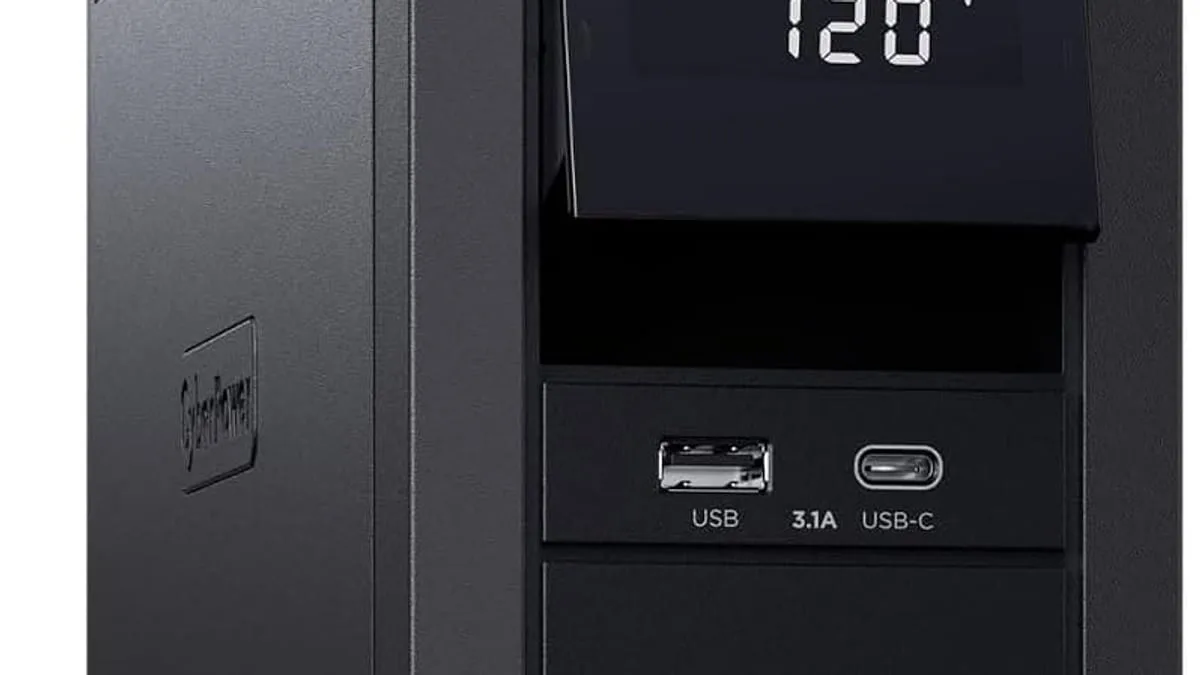
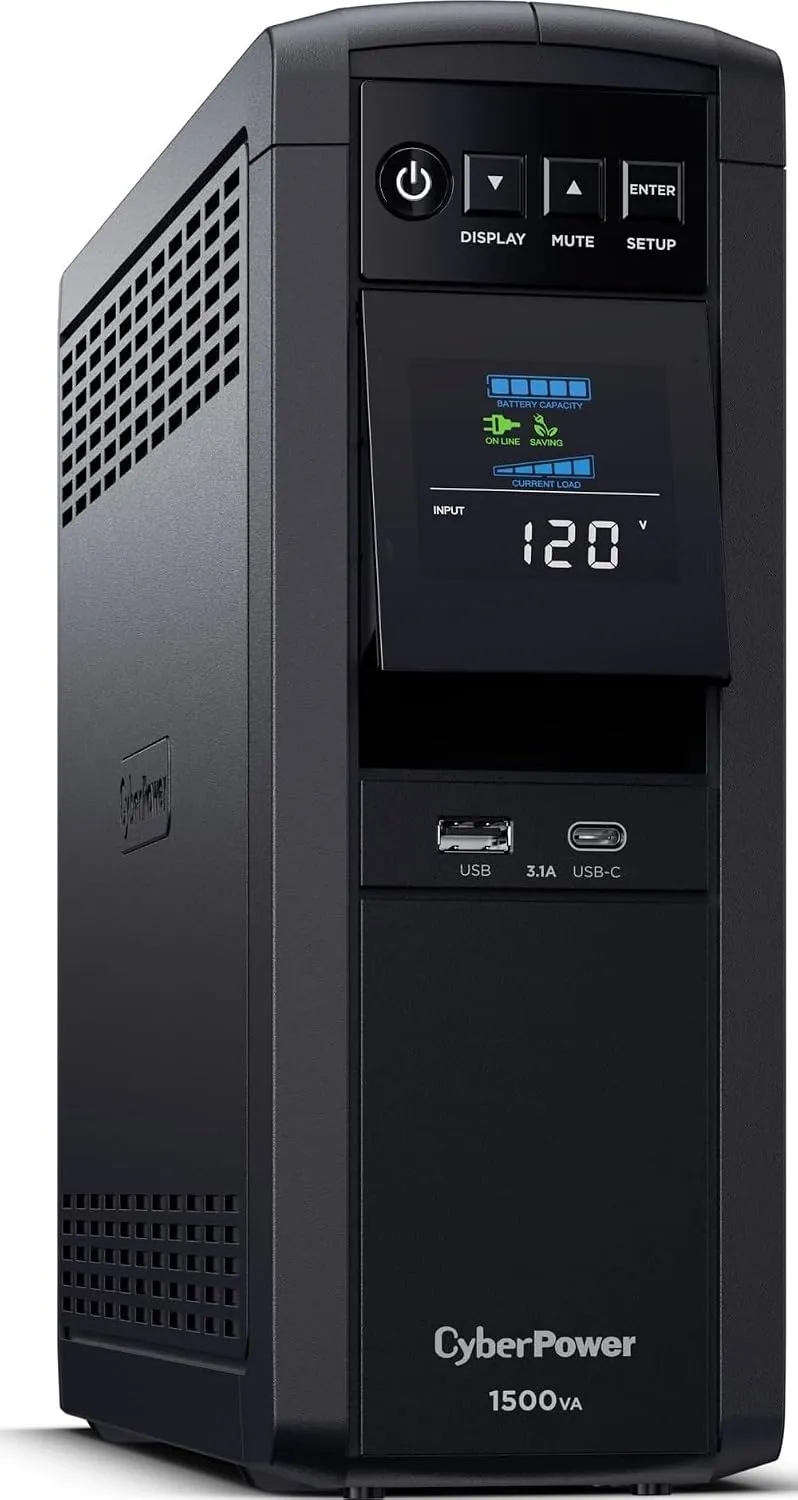
The $500,000 Connected Equipment Guarantee on quality units like the CyberPower CP1500PFCLCD is the fine print that matters: if a surge damages connected gear, the manufacturer pays. That guarantee — covering the full replacement cost of a PC, monitor and peripherals — is the difference between a UPS and a surge strip with a battery.
Is a sinewave UPS worth the extra cost?
Bottom line: if you have ever lost work to a power blip, a sinewave UPS pays for itself the first time. The premium over a simulated-sinewave unit is usually $30-60, which is cheap insurance against a $1,500+ PC shutdown.
Quick sinewave UPS checklist
- Pure sinewave output: non-negotiable for 80 Plus Gold PSUs and gaming rigs.
- AVR (voltage regulation): corrects brownouts and voltage sags.
- Runtime: 15-30 minutes is plenty for save-and-shutdown.
- Surge absorption: rated in joules — 1000+ joules is the floor for a PC.
- Connected Equipment Guarantee: $100K+ coverage, not a $10K token.
As an Amazon Associate, I earn from qualifying purchases.
Frequently Asked Questions
Pure sinewave is a clean 60Hz wave matching utility power. Simulated is a stepped approximation that some modern power supplies reject.